Appliance Leak Water Damage in Winchester
A wiped kitchen or laundry floor can hide the larger problem beneath an appliance. Identify the failed connection, check adjoining cabinet bases and assess the flooring layers that received water first.
(888) 629-3140Discuss a hidden appliance spill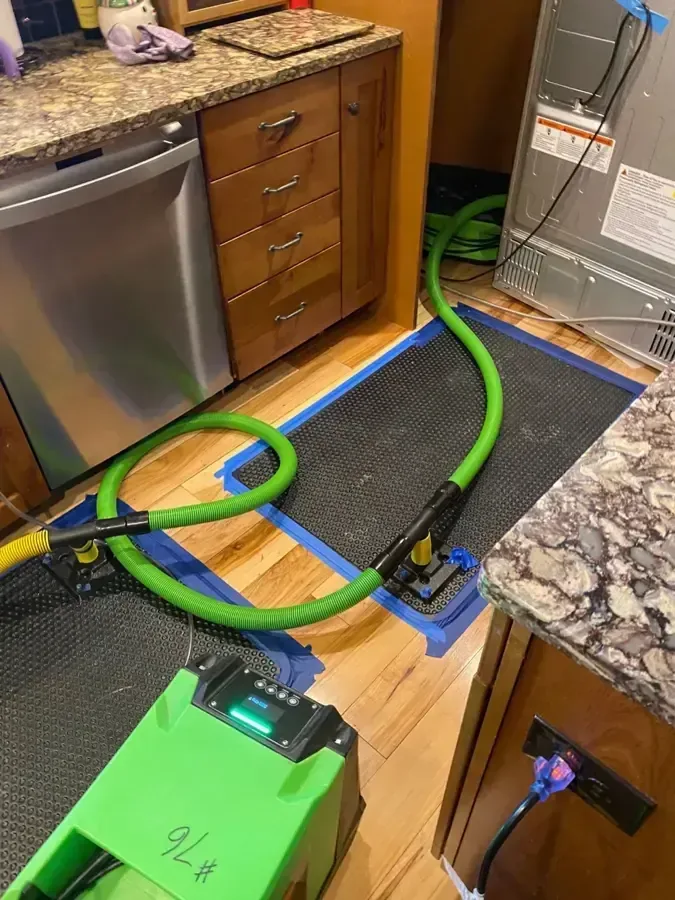
An appliance can release water into a space that is difficult to see or reach. A dishwasher may wet the floor behind its front panel, while a washer connection can direct water against a wall before it spreads outward. Stop using the affected appliance and arrange safe source evaluation. Pulling equipment across a wet floor without considering connections can create additional damage, so movement should be coordinated with inspection and repair access.
How appliance leak water damage is handled
Relate the release to layout
Inspect the appliance surroundings, cabinet bases and connected floor transitions. Check repair findings and identify whether water entered another enclosed space, rather than limiting the assessment to the open floor in front.
Document concealed contact
Coordinate safe equipment movement and photograph the newly visible surfaces. Record affected wall edges, underlayment and fixed cabinet parts so material decisions can be explained before removal or reinstallation changes the assembly.
Dry accessible retained layers
Arrange drying for suitable materials and monitor their response. Check whether cabinet construction or floor coverings restrict evaporation, then discuss additional access if the concealed moisture remains higher than the surrounding comparison areas.
Confirm the installation handoff
Check the source repair and remaining material condition before equipment returns to its final position. Identify any unfinished cabinet, wall or flooring work so the owner can coordinate repairs around the restored appliance.
Look beyond the cleaned walking surface
In a Winchester kitchen or laundry area around Swanton Street, Cross Street or the Mount Vernon Street bridge area, the actual cabinet and floor layout matters more than the size of the visible puddle. Describe where water first appeared and which appliance was operating. A damp toe kick, swollen panel edge or wet adjoining closet can reveal a route that a surface wipe missed.
The town's history of river flooding concerns a different source from an indoor appliance release. Keep the account focused on the observed connection or equipment problem, the water condition and the surfaces contacted inside the room. This gives the restoration provider a useful basis for determining where access is needed beneath fixed finishes.
- Check accessible cabinet bottoms and end panels for swelling or moisture at their lower edges.
- Inspect flooring seams in front of the appliance and at adjoining room transitions.
- Record wet wall surfaces behind equipment before repair work conceals them again.
- Consider whether water crossed into a pantry, closet or enclosed base beside the appliance.
- Keep repair findings about hoses, valves or internal components with the damage photographs.
Water still spreading?
A clean-looking floor can conceal water beneath an appliance or cabinet base. Describe the equipment involved, the first wet edge and any repair findings so the assessment can reach the layers behind the visible spill.
(888) 629-3140Check appliance related floor damageCoordinate equipment movement with material decisions
Moving the appliance can expose wet flooring or wall material that was previously hidden. Photograph those surfaces before cleaning, repair or reinstallation changes the view. Access should be sufficient to inspect the affected assembly, but removal of intact cabinets or flooring needs a stated reason tied to moisture, damage or the ability to dry retained materials.
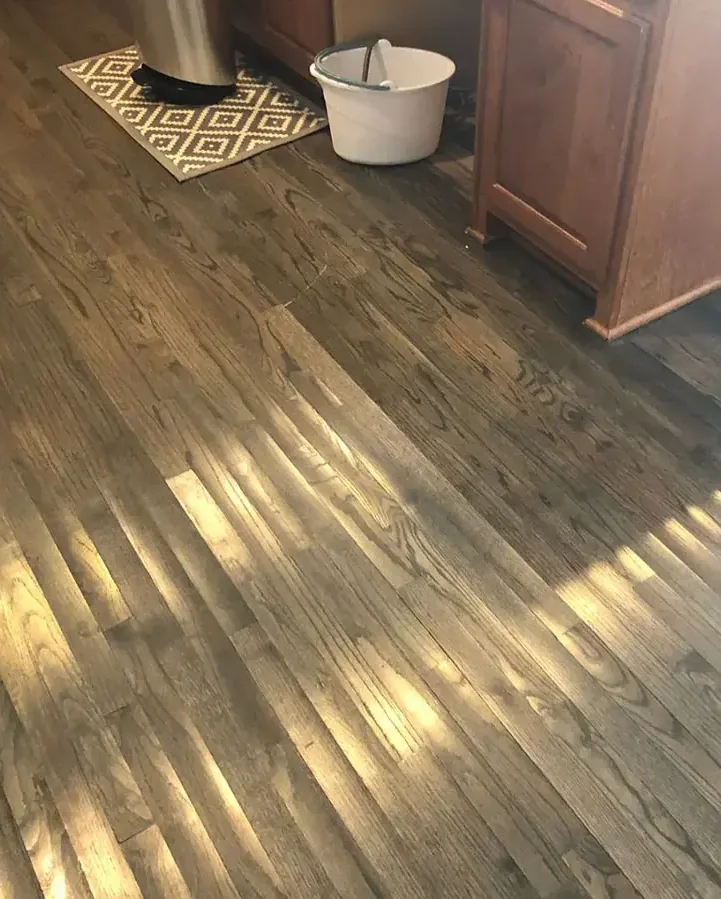
A cabinet face may remain presentable while its base is affected. Flooring can also hold moisture beneath an intact finish. Discuss each material separately instead of treating the kitchen or laundry as a single uniform surface. Suitable retained layers may be dried in position when access allows; damaged or inaccessible layers may need another approach.
Keep the work area safe
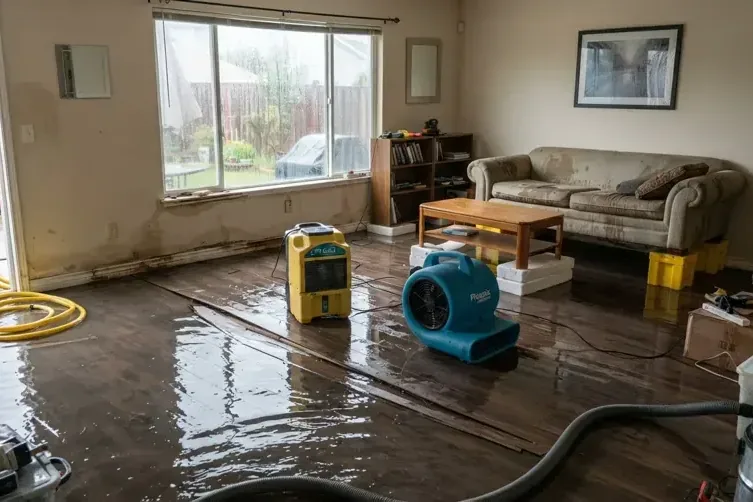
The response team checks electricity, unstable surfaces and water contamination before opening wet materials. Household members keep children and pets away from affected rooms. A qualified electrician handles wet circuits. The cleanup crew sets containment when dirty water or debris could reach occupied space, then establishes a safe route for equipment and removed material.
Finish the repair beneath the appliance as well
The appliance repair stops future release, while restoration addresses the wet room. Hardwood floor damage assessment is useful when wood boards have changed shape, and structural drying covers retained wall and floor materials that need monitored moisture removal.
Before the equipment is reinstalled, check the concealed surfaces and any remaining work with the repair provider. Document readings, removed panels and unfinished floor or wall repairs. A clear handoff helps prevent the newly repaired appliance from hiding an unresolved wet area and gives the owner a practical account of the work completed behind the visible room finishes.
First decisions for appliance leak water damage
Stop the affected cycle
Discontinue appliance use and arrange safe attention to water and power connections. Do not reach into standing water to unplug equipment or pull a connected appliance away from a wet wall.
Record the first signs
Note which appliance was operating, where water appeared and whether nearby cabinet edges changed shape. Photographs of the original puddle and any recurring seepage help focus the source investigation and material assessment.
Expose only safe viewing areas
Remove small dry items from accessible adjoining cabinets if doing so avoids the wet area. Leave equipment movement, damaged panel removal and concealed connection work to the coordinated repair and cleanup plan.
Protect access after repair
Ask that newly exposed wet surfaces remain available for inspection before equipment is pushed back. A short-lived repair opening may be the clearest opportunity to evaluate the floor and wall behind the appliance.
What does appliance leak water damage cost in Winchester, MA?
Appliance leak cleanup in Winchester depends on hidden spread beneath equipment, cabinetry and floor coverings. These planning ranges describe restoration work; appliance service and replacement parts should be distinguished from drying and finish repair in the estimate.
Accessible small spill
$700 to $1,500
- Floor inspection
- Limited wet finishes
- Focused extraction access
Cabinet and floor layers
$1,500 to $3,000
- Enclosed base assessment
- Underlying moisture checks
- Targeted material drying
Concealed connected damage
$3,000 to $4,500+
- Restricted assembly access
- Adjoining room involvement
- Finish replacement
Category of water, square footage, material class and drying delay shape the scope. water damage cost calculator gives an estimate only.
Appliance leak water damage across Winchester
Properties around the Waterfield Road corridor, Wedgemere Station area and other town locations can describe appliance access when requesting help. Mention fixed cabinetry, adjoining rooms and any equipment movement already completed for repair.
The same service nearby: appliance leak water damage in Belmont, Arlington, Somerville.
Appliance Leak Water Damage questions in Winchester, MA
Can a small dishwasher spill damage hidden flooring?
Water can pass through seams or beneath the appliance before it becomes visible in the room. A small puddle does not describe the full contact area. Inspect the flooring transition, accessible cabinet edges and concealed surfaces revealed during safe equipment movement to establish the actual restoration scope.
Should the appliance be pulled out immediately?
Movement should account for water, power and drain connections, along with the wet floor condition. Pulling connected equipment can damage components or spread water. Coordinate safe movement with the repair professional so the newly exposed wall and floor can be documented and assessed before reinstallation.
Why inspect cabinet panels if the door looks normal?
The lower edges and concealed base can receive water while the visible door remains unchanged. Some materials swell or lose integrity after contact, and enclosed sections can restrict drying. The assessment should explain the condition of each affected part and the reason for retaining or replacing it.
Does appliance repair remove the need for drying?
Repair addresses the source but leaves water already absorbed into floor and wall materials. Those layers may need extraction, access or monitored drying after the appliance works again. Keeping the repair findings and restoration record together helps clarify the separate work completed on equipment and building finishes.
What if water reached the room beside the kitchen?
Follow the floor transition and inspect the adjoining material instead of stopping at the kitchen doorway. Water may travel below a covering and emerge elsewhere. Record the affected boundary and include any connected room that needs assessment, even when its visible surface appears less wet than the original spill.
When should the appliance return to its final position?
Coordinate reinstallation with the assessment of surfaces behind and beneath it. Remaining moisture, removed panels and finish repairs should be reviewed while access is still available. The owner should understand which materials are ready to be concealed and which tasks need completion before equipment blocks them again.
Arrange concealed spill inspection
Coordinate appliance movement with the drying assessment before wet surfaces are hidden behind the equipment again.
(888) 629-3140Discuss moisture beneath fixed cabinets