Ceiling Leak Water Damage in Belmont, MA
A wet ceiling can hide water around wiring, insulation and framing. The response team secures the area below, traces the upstairs source and dries the exposed cavity after necessary removal.
(888) 629-3140Discuss the wet ceiling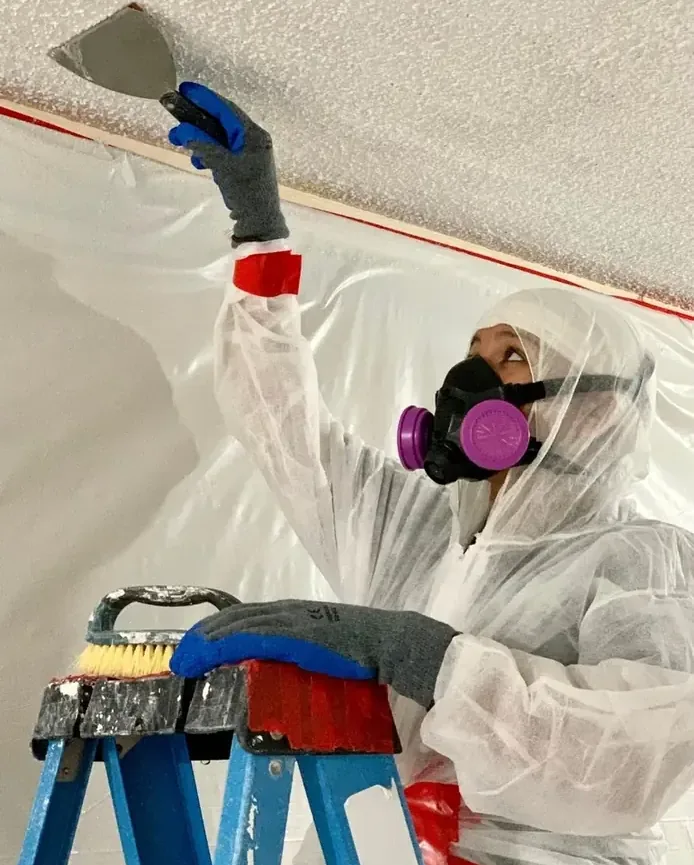
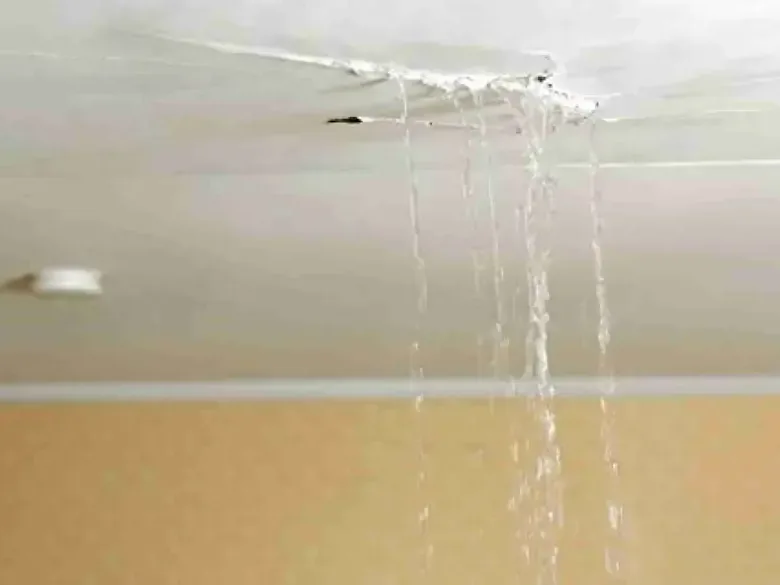
A bath overflow or concealed pipe leak can appear first as a stain in the room below. The technician inspects the upper room and the ceiling assembly instead of treating the visible mark as the whole loss. Properties around Cushing Square, Belmont Center and Waverley Square receive a room-by-room assessment of water travel. The response team checks electrical fittings and overhead stability before setting equipment or opening the damaged surface.
How ceiling leak water damage is handled in Belmont
Assess overhead conditions
The response team checks sagging material, ongoing drips and electrical hazards from a safe location. The household describes the upstairs room and the timing of the leak to help direct source investigation.
Create protected access
The contractor isolates the room and opens damaged ceiling material where inspection requires it. Workers control falling debris and record the wet insulation and framing before removal changes the view.
Dry the cavity
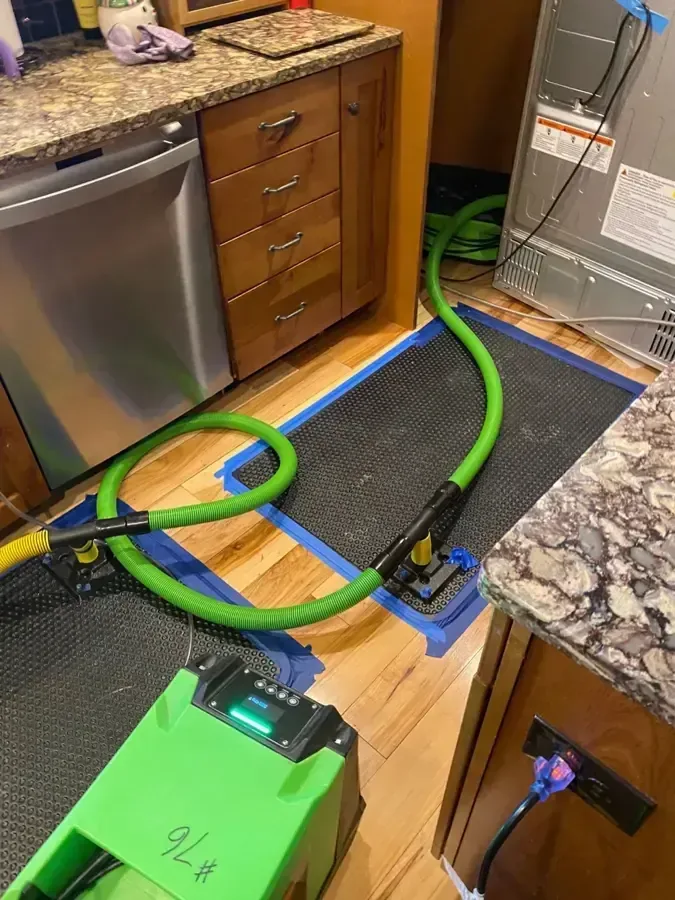
The crew positions air movement to reach retained wet components and manages room humidity. Material readings show whether the setup is effective, including areas at the edge of the visible stain.
Hand off for repair
The technician records the drying endpoint and identifies remaining finish work. The household coordinates ceiling reconstruction after source correction and moisture verification, keeping the access and material records with the loss file.
Find the source above the visible damage
A ceiling can collect water from plumbing, an appliance, a bathroom floor or rain entering higher in the building. The contractor asks what was operating when the mark appeared and whether the drip continues. A plumber handles failed supply or drain components. Where rain is the cause, the inspection includes the appropriate roof and attic route.
- The technician checks fixtures and floor surfaces in the room immediately above.
- The crew follows moisture toward wall tops and adjoining ceiling bays.
- The household keeps the area below a bulge or loose finish clear of people and belongings.
- An electrician assesses affected lights and circuits before workers disturb nearby wet material.
- Workers protect the furniture and floor beneath the planned opening, then label debris and wet insulation so the record preserves the original overhead assembly and affected location.
- The technician checks the wall-to-ceiling junction where moisture can turn downward, using readings to decide whether the lower wall needs inspection beyond the visible overhead mark.
The source description helps separate a clean supply escape from used water or a contaminated drain overflow. That distinction changes material handling and cleaning decisions.
Water still spreading?
An overhead stain can hide wet insulation and wiring behind the finish. The response team checks the source and cavity, protects the room below and records drying before the ceiling closes.
(888) 629-3140Assess the ceiling cavityOpen the ceiling under controlled conditions
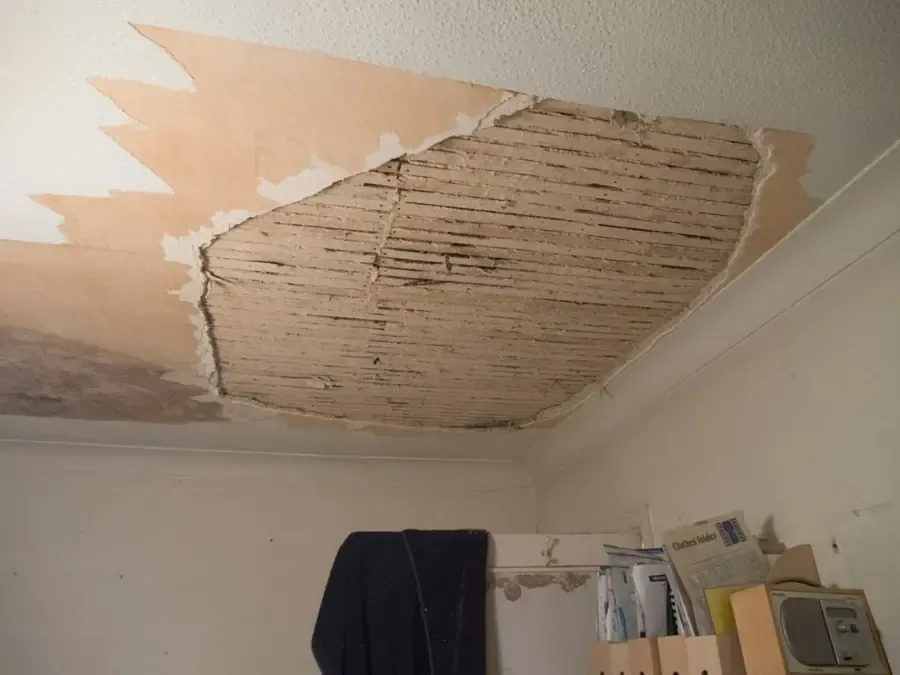
Wet drywall or plaster may lose strength before it looks badly damaged. The contractor protects the room beneath and plans removal to expose the wet area safely. Insulation, framing and finish material receive separate assessments. An opening can also reveal water that traveled farther than the stain, changing the drying footprint.
At a building near Belmont Hill, the team checks the actual ceiling construction instead of assuming a uniform assembly. The contractor records what remains and explains why certain sections need removal. Equipment then targets the exposed cavity, with dehumidification controlling moisture released into the room.
- Workers isolate the debris route from occupied areas and protect nearby furnishings.
- The technician measures structural timber rather than relying only on a dry ceiling face.
- The contractor keeps the source access available until repair and drying records are complete.
The EPA water information and Ready.gov flood safety offer general precautions for household water hazards. Local work follows the inspected conditions in the room.
Keep the work area safe
The response team checks electricity, unstable surfaces and water contamination before opening wet materials. Household members keep children and pets away from affected rooms. A qualified electrician handles wet circuits. The cleanup crew sets containment when dirty water or debris could reach occupied space, then establishes a safe route for equipment and removed material.
Confirm the cavity is ready to close
The drying technician records repeat moisture readings and compares affected components with a suitable reference. An apparently dry face does not settle the condition of insulation or timber inside the ceiling. The team adjusts airflow where readings stall and documents the endpoint before a repair contractor replaces finishes.
Documentation for your insurance claim
The scope identifies the upstairs source, the lower room, opening locations and affected materials. Photos before removal show the original condition. Daily readings and equipment records explain the dry-out. The household checks policy terms and retains plumbing or appliance repair information, while the restoration contractor separates mitigation work from the later ceiling reconstruction.
First decisions for ceiling leak water damage in Belmont
Clear the area beneath
Household members stay away from a swollen ceiling and move only items reachable from a dry, stable position. The contractor evaluates loose finishes before anyone works under the affected section.
Check electrical fittings
Wet lights, switches and nearby circuits require qualified electrical attention. The drying crew plans equipment power around the clearance provided, avoiding improvised extension-cord routes through a damp or debris-filled room.
Trace connected surfaces
The technician checks the upper floor and wall tops as well as the ceiling face. Following those connected areas reveals moisture that a small patch or stain-covering repair could otherwise leave behind.
Keep closure evidence
The contractor documents the cavity and final readings before new finishes conceal them. The household then has a clear account of source repair, material removal and drying to share with the repair trade.
What does ceiling leak water damage cost in Belmont, MA?
Ceiling leak water damage cleanup in Belmont often ranges from $900 to $4,500. Overhead access, insulation removal, affected electrical fittings and wet framing influence the scope; plumbing repair and new ceiling finishes add separate costs.
Small overhead leak
$900 to $1,800
- Source assessment
- Limited opening
- Focused drying
Wet cavity and insulation
$1,800 to $3,000
- Protected removal
- Framing readings
- Equipment monitoring
Connected ceiling areas
$3,000 to $4,500+
- Wider access
- More material handling
- Repair documentation
Category of water, square footage, material class and drying delay shape the scope. Belmont water damage cost calculator gives an estimate only.
Ceiling leak water damage across Belmont
Water damage service covers ZIP 02478, including Belmont Center, Cushing Square, Waverley Square and Belmont Hill. The restoration team assesses the actual wet rooms and access conditions before setting the extraction and drying scope.
Arlington, Waltham, Cambridge, Somerville and Winchester are also within the service area.
Related water damage services in Belmont
Ceiling Leak Water Damage questions in Belmont, MA
Is a small ceiling stain urgent?
A stain deserves prompt source investigation because the cavity can hold more water than the mark suggests. The technician checks the upper room, nearby wiring and the ceiling material. A sag, active drip or wet light fitting increases the need to keep the space below clear until safe assessment.
Can the household keep using the upstairs bathroom?
Use should stop where the fixture or drain may be feeding the leak until a plumber evaluates it. The restoration crew asks about the timing and checks the affected rooms. Continuing use can add water to a hidden cavity and make it harder to establish a stable drying area.
Will all ceiling material need removal?
The contractor bases removal on condition, contamination and access to wet components. Some material can remain if it is sound and can dry appropriately; unstable or unsuitable finishes need removal. The team explains the boundary and photographs the assembly so the household understands the decision before repair work begins.
Why inspect walls beside the ceiling?
Water can move along framing and descend at wall tops before appearing lower down. The moisture survey checks these connected surfaces and the room below the source. That approach helps locate damp insulation or timber beyond the original mark and prevents the drying plan from stopping too early.
Can drying equipment run in an occupied room?
The contractor assesses safe power, access, contamination and the work-zone boundary before deciding. Some rooms need temporary separation while overhead removal or drying occurs. The household follows the contractor’s access instructions and keeps children and pets away from hoses, cords, wet materials and unstable ceiling sections.
What proves the ceiling cavity has dried?
The technician records material measurements over time and compares retained components with suitable references. The drying endpoint concerns the assembly behind the finish, not just a smooth or unstained surface. Those records support the repair handoff before insulation, plaster or drywall closes the inspected area again.
Make the overhead repair sequence clear
The contractor separates source repair, controlled opening and cavity drying for the affected room.
(888) 629-3140Start the ceiling assessment