Structural Drying and Dehumidification in Belmont, MA
Drying begins with the materials, not a timer. The restoration technician maps moisture, sets air movement and dehumidification for the wet assembly, and records progress against a suitable dry reference.
(888) 629-3140Review the material readings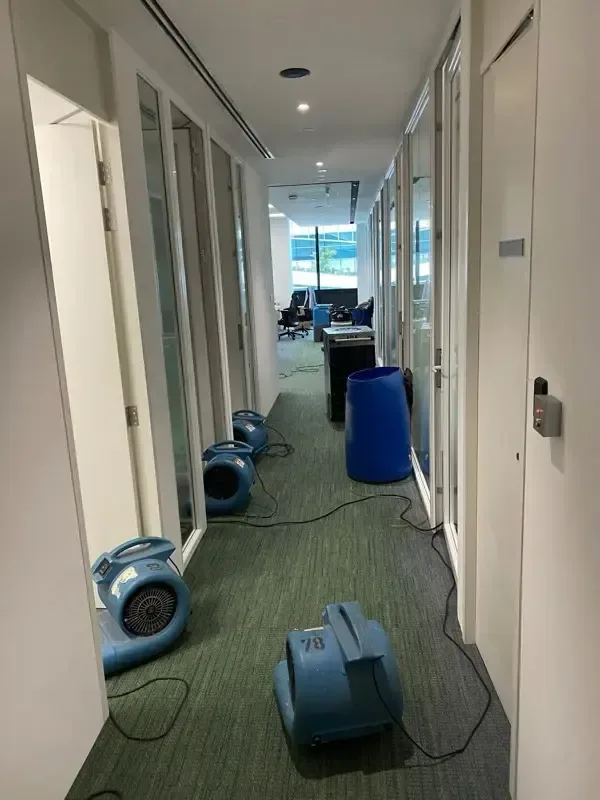
A room can look dry while its subfloor or wall framing still holds water. Structural drying addresses that absorbed moisture after source control and liquid removal. In Belmont Center, Cushing Square and Waverley Square, the technician checks the actual materials and occupied-space needs before placing equipment. The work follows the IICRC S500 drying standard and uses measurements to distinguish progress from an improvement in surface appearance.
How structural drying and dehumidification is handled in Belmont
Survey the wet assembly
The technician locates absorbed moisture and classifies the loss before choosing equipment. Reference readings and photographs establish the starting condition, including accessible cavities and adjoining surfaces beyond the visible stain.
Set controlled evaporation
The crew positions air movers for exposed wet material and provides dehumidification for the room load. Safe power and clear walking routes allow the equipment to operate without creating unnecessary household hazards.
Monitor and adjust
Repeat measurements show which materials respond and where progress slows. The contractor changes access, airflow or moisture removal as needed, documenting the adjustment so the dry-out remains tied to observed conditions.
Record final conditions
The technician verifies retained material readings and identifies any separate repair requirements. The household receives a documented endpoint before equipment leaves and before new finishes conceal the inspected areas of the building.
Build the drying plan from a moisture map
The technician measures affected materials and identifies a suitable unaffected reference. Water category, material class and the area involved shape access and equipment choices. Dense concrete, timber and layered finishes release moisture differently, so a single room-air reading cannot describe every component. The team records test locations for meaningful comparisons during subsequent visits.
- The initial survey follows water into wall bases, floor transitions and accessible cavities.
- The contractor identifies layers that restrict evaporation and explains necessary access.
- Technicians separate material moisture readings from temperature and relative humidity records.
- The crew notes contamination or damaged porous material that requires removal before drying.
- The technician records the instrument and material at each test point, helping subsequent readings describe actual moisture change instead of a difference between locations or measurement methods.
- The contractor reviews airflow around fixed cabinets and closed cavities when progress slows, explaining any additional access before altering the retained assembly or increasing the equipment load.
A property near Belmont Hill receives a drying setup based on its inspected construction. The material survey determines the equipment load and drying endpoint.
Water still spreading?
A dry-looking room can still hold moisture inside its structure. The drying technician maps those materials, records progress and adjusts equipment until the retained assembly reaches the appropriate goal.
(888) 629-3140Discuss the moisture mapBalance air movement with moisture removal
Air movers encourage evaporation from exposed wet surfaces. Dehumidifiers remove that released moisture from the air so the materials can continue drying. A fan alone can shift humid air around the room without providing enough moisture removal. The technician adjusts equipment position, access and humidity control when readings show slow progress.
- The crew maintains safe power routes and keeps cords out of household walking paths.
- Technicians check whether closed doors or moved contents interrupt the planned airflow.
- The contractor explains why equipment remains running between scheduled checks.
- The team evaluates dense or low-permeance assemblies for more specialized drying methods.
Household members should discuss noise, room access or electrical concerns with the contractor before switching equipment off. EPA water information and Ready.gov flood precautions provide general background for managing water-related hazards.
Keep the work area safe
The response team checks electricity, unstable surfaces and water contamination before opening wet materials. Household members keep children and pets away from affected rooms. A qualified electrician handles wet circuits. The cleanup crew sets containment when dirty water or debris could reach occupied space, then establishes a safe route for equipment and removed material.
Use the endpoint to guide repairs
The drying goal concerns retained material condition. Depending on the material and meter, technicians compare readings with an unaffected reference and the requirements of the next repair. A floor installer may need additional substrate evaluation before a covering returns. The contractor records slow areas and explains what changed in the setup to address them.
Documentation for your insurance claim
The file includes the initial moisture map, equipment placement, daily material measurements and psychrometric logs. Photographs show access and the condition before closure. The household checks policy terms with its insurer. An itemized drying record explains why equipment ran and when the retained structure reached the documented endpoint, while replacement finishes remain a separate repair decision.
First decisions for structural drying and dehumidification in Belmont
Establish the baseline
The technician records the affected locations and suitable reference material before equipment starts. Consistent test points make later readings meaningful and help distinguish a slow component from a measurement taken somewhere different.
Keep the setup intact
The crew explains equipment placement and safe access. Household members report noise or practical concerns before moving fans or shutting units off, allowing the contractor to adjust the arrangement without losing moisture control.
Measure hidden components
The contractor checks accessible framing and floor layers as well as visible finishes. An apparently dry face can conceal damp material behind it, so access decisions follow the moisture map and the assembly.
Coordinate the next finish
The drying team supplies endpoint records before reconstruction. A flooring or repair contractor evaluates the requirements of the chosen replacement material, keeping installation decisions connected to the retained substrate’s measured condition.
What does structural drying and dehumidification cost in Belmont, MA?
Structural drying in Belmont commonly ranges from $1,000 to $6,000 after liquid removal. Equipment load, material density, access and drying duration shape the cost. Contaminated material removal and reconstruction can add separate scopes.
Small exposed assembly
$1,000 to $2,200
- Focused airflow
- Dehumidification
- Material checks
Several rooms or layers
$2,200 to $4,000
- Larger equipment load
- Cavity access
- Daily documentation
Dense concealed materials
$4,000 to $6,000+
- Specialized methods
- Longer monitoring
- Detailed endpoint record
Category of water, square footage, material class and drying delay shape the scope. Belmont water damage cost calculator gives an estimate only.
Structural drying and dehumidification across Belmont
Water damage service covers ZIP 02478, including Belmont Center, Cushing Square, Waverley Square and Belmont Hill. The restoration team assesses the actual wet rooms and access conditions before setting the extraction and drying scope.
Arlington, Waltham, Cambridge, Somerville and Winchester are also within the service area.
Related water damage services in Belmont
Structural Drying and Dehumidification questions in Belmont, MA
What does IICRC S500 mean for drying?
IICRC S500 is the industry standard for professional water damage restoration. The practical work includes assessing the water and materials, documenting moisture and choosing a drying approach for the loss. The technician uses measurements and appropriate references to evaluate progress rather than treating a fixed calendar period as proof of completion.
Why are both fans and dehumidifiers needed?
Air movement helps wet surfaces release moisture, while dehumidification removes that moisture from the room air. Without enough moisture removal, evaporation can slow as humidity rises. The technician balances the equipment with the material load and adjusts placement when readings show that an area is not responding.
Can equipment stop overnight because of noise?
The household should discuss the problem with the contractor before switching units off. Interruptions can change humidity and slow drying, particularly inside layered materials. The crew can evaluate placement, access and other practical adjustments while keeping the drying plan tied to measurements and safe operation.
Does a dry surface mean the framing is ready?
The assembly needs material measurements beneath its exposed face. The technician checks accessible framing and floor layers using appropriate instruments and reference readings. Controlled access may be necessary where a covering hides wet material, with the reason and location documented before repairs close it.
How long should structural drying take?
The duration depends on the material, water load, access and response to the equipment. Some contained losses dry within several days, while dense or concealed assemblies need longer. Daily readings show progress and justify adjustments. The contractor explains the current trend and explains the measured progress before setting repair expectations.
What records should accompany completed drying?
The file should describe the initial wet area, equipment setup, material readings and final conditions at the inspected locations. Photos and psychrometric records provide context for the work. The household can share that record with the insurer and repair trade, while the installer checks any product-specific substrate requirements.
Let material readings set the drying endpoint
The team documents the wet boundary and the progress of retained framing, flooring and wall components.
(888) 629-3140Arrange measured structural drying