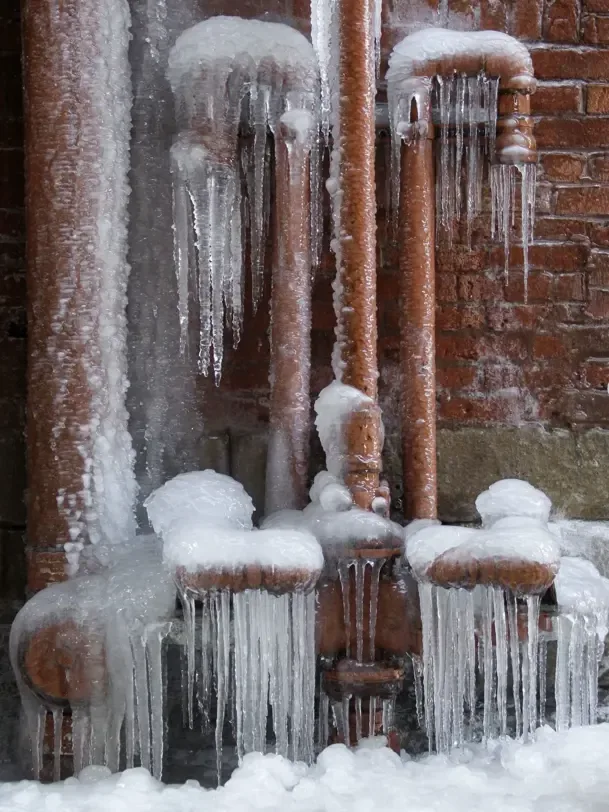
Somerville warns that pipes in exterior walls can freeze when heat does not circulate. Municipal advice also identifies unheated crawl spaces, garages, and basements as places needing pipe protection. When a frozen pipe releases water during thaw, attention shifts from the cold pipe to the rooms and concealed layers it has wetted. The response needs to follow both the plumbing damage and the water left behind.
Key takeaways
- Locate the shutoff from a safe, dry approach before dealing with a suspected break.
- Report reduced flow and any water that appears as temperatures change.
- Keep thawing and pipe repair with an appropriate plumbing professional.
- Inspect walls and floors beyond the visible pipe opening.
- Revisit the cold exposure after the damaged area has been dried and repaired.
Notice the difference between poor flow and visible water
A fixture with little flow can be the first observation, but it does not show the condition of every concealed pipe section. The occupant can describe which fixtures are affected and whether the change followed cold weather.
The plumbing contact can use those details to plan a focused inspection of the affected supply.
A visible release creates a second priority: limiting the water reaching the building. A safely accessible shutoff may be part of the response, while an unsafe route requires professional assistance.
The report should state whether water is present, where it appears, and whether the condition changed after the attempted isolation.
Somerville's Water and Sewer Department describes frozen pipes as a common occurrence in extremely cold weather. Its local advice points to vulnerable spaces rather than a single neighborhood.
A homeowner can therefore describe the actual unheated area or exterior wall involved instead of assuming every room faces the same exposure.
- List the fixtures with reduced flow and any fixtures still operating normally.
- Note a visible drip or spray separately from the original flow complaint.
- Identify the nearest safe route to the property shutoff.
Explain where cold reaches the affected pipe
A pipe inside an exterior wall may receive less indoor heat than an exposed pipe in a heated room. Municipal guidance specifically warns about inadequate heat circulation in those walls.
The plumbing inspection can identify the affected section and how its location relates to the cold space around it.
The city also names unheated crawl spaces, garages, and basements in its protection advice. At a property with one of those spaces, the inspection should record access conditions and the pipe's actual position.
This gives the repair contact a concrete description of the exposure that needs attention after the immediate release is stopped.
Frozen pipe water damage cleanup addresses the surrounding wet structure once the plumbing response is under way. A repaired pipe can leave insulation, framing, or flooring in need of treatment.
The recovery plan should identify those materials separately so the cold exposure and the resulting water damage both receive attention.
Watch the route water takes as the pipe thaws
A concealed break may become apparent when flow resumes and water reaches an opening in the finish. The first visible point can be a ceiling edge, wall base, or floor joint away from the pipe itself.
Observations of that change help the inspection follow the release through the connected assembly.
The occupant can record where water first appeared and how it spread while remaining outside unsafe areas. A photograph showing the full wall or floor gives more context than a close view of a drip alone.
The responding team can compare that image with the pipe location and the materials exposed during repair.
The restoration boundary should expand when inspection finds wet layers beyond the obvious opening. Water beneath a floor covering or behind trim can remain hidden after the visible flow ends.
The crew can explain which additional areas need measurement and whether access is needed to reach the moisture that the initial pipe repair did not expose.
Keep pipe access and material removal purposeful
Opening a wall for plumbing repair reveals a limited view of the surrounding assembly. That access may help the restoration inspection, but the wet area can extend beyond it.
The plumber and restoration contact should exchange findings so the next opening serves a clear purpose and the condition of retained material is understood.
Insulation close to the break may obstruct both pipe access and drying of adjacent framing. The team should assess its condition and explain any planned removal.
Photographs of the exposed cavity can record the relationship between the repaired pipe, the wet insulation, and the surfaces that still require drying.
Contents near the work area also need a place in the plan. A crowded storage room or garage can make it difficult to examine the full water route.
Moving items through a safe path and labeling their original positions helps reveal affected edges without losing track of what was wet and what stayed clear.
- Share the pipe repair location with the person mapping moisture.
- Photograph cavity materials before closing or enlarging an opening.
- Keep displaced belongings associated with their original room location.
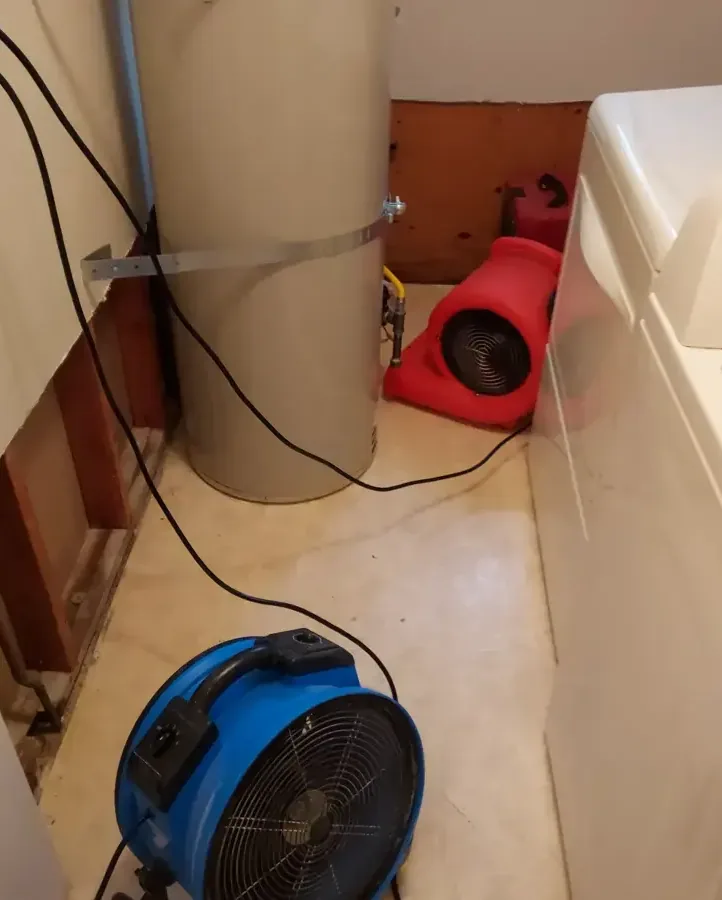
Remove water from the spaces reached by the release
Water extraction addresses the liquid that has collected on accessible floors and other surfaces. The selected approach depends on the room, the amount of water present, and safe equipment access.
Removing that liquid makes subsequent inspection easier and reduces the moisture that remains available to spread into nearby finishes.
A release inside a wall can create wet areas on more than one level. The room below deserves attention when the observed path leads through a ceiling or floor assembly.
A separate entry for each room keeps an apparently minor upper opening from obscuring a larger area of damage beneath it.
The extraction record should identify remaining wet finishes and locations that still need access. That information makes the transition into drying clear for the owner.
It also helps explain why equipment may continue operating after the obvious puddle disappears and the damaged pipe has already been repaired.
Dry the retained assembly before sealing the cavity
Structural drying should follow identified materials through repeated measurements. Framing near the pipe and flooring below it may respond differently because their exposure and access differ.
The crew can compare progress at each location and adjust the drying arrangement when a retained area remains wet.
The owner should understand which openings are serving the drying process and when they can be closed. Installing replacement insulation or a new finish too early can obstruct access to material still being monitored.
A clear repair handoff allows the plumber, restoration team, and finish contractor to work from the same completion information.
The final measurements belong with the source finding and the photographs of the exposed cavity. Together they describe the path from the pipe failure to the repaired room.
That record is more useful than an equipment list alone because it shows which materials were affected and why each part of the work was performed.
- Match each final reading to a location recorded earlier in the job.
- Note any retained floor or wall area that needs further attention.
- Coordinate cavity closure with the documented drying outcome.
Revisit protection where the freeze occurred
After the release is controlled and the structure recovered, the property contact can revisit the specific cold exposure with the plumbing professional. The municipal advice about exterior walls and unheated spaces gives that conversation a practical starting point.
The aim is a property specific correction suited to the pipe and the space around it.
Access should remain understandable after the room is restored. A record of shutoff locations, repaired sections, and concealed service areas can help a future maintenance visit.
In a shared property, the responsible contact can also clarify how an occupant should report loss of flow or water appearing during later cold weather.
The completed repair should leave an owner able to explain both what failed and what changed. Notes about the exposure correction can accompany the plumbing invoice, while the restoration record documents the recovered materials.
That separation preserves the useful details for later maintenance without confusing pipe protection with the drying work already completed.
Questions
Can a pipe start leaking only after flow returns?
A damaged section may release water as the frozen obstruction thaws. The plumbing assessment should account for new moisture appearing during that change, including water emerging away from the accessible pipe.
Which spaces does the city identify for protection?
The municipal advice specifically names unheated crawl spaces, garages, and basements, and it warns about exterior wall pipes receiving inadequate heat circulation.
Should an occupant open the wall to look for a break?
Professional inspection can determine safe access and the location worth opening. An occupant can help by describing the affected fixture and photographing visible changes from a dry position.
Why can a repaired pipe still require drying equipment?
Water released before repair can remain inside nearby materials. Drying follows those retained layers until their condition supports the planned finish work.
What should remain in the maintenance file?
Useful items include the repaired pipe location, the source of cold exposure, any protection changes, and the restoration closeout. Those details support later service without relying on memory.